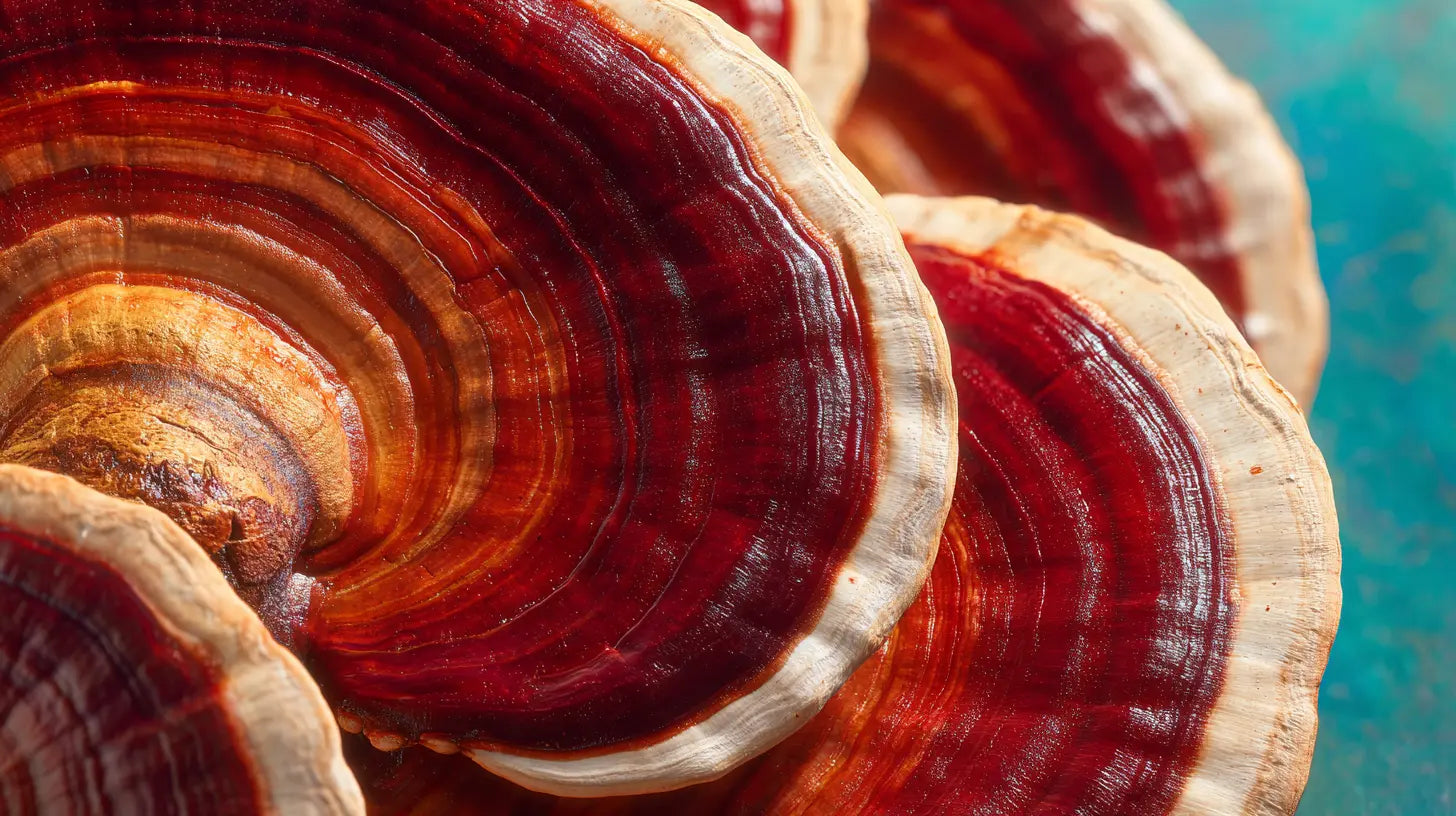
🍄 Reishi (Ganoderma lucidum) is a medicinal mushroom whose beta-glucans gently support immune balance, while small human studies link it to less fatigue and better well-being under stress. It builds resilience over weeks, not an overnight fix.
Long to-do list, winter sniffles making the rounds, and your brain will not settle. That is exactly when people start searching for reishi. This deep red, shiny mushroom has a long history in East Asian traditions for supporting resilience, and today it shows up in powders, capsules, and blends that promise calm and immune strength. Here is a clear, no-drama look at what reishi can and cannot do, how to use it, and where Magic Scoop fits in.
What reishi is, really.
Reishi is the common name for Ganoderma lucidum. It contains polysaccharides called beta-glucans and a family of triterpenes. Beta-glucans are the headline act because they can nudge immune activity, which is why reishi is often framed as "immune supporting."
Why the immune and stress connection matters.
When you are under pressure, your stress response ramps up and sleep often slides. That mix can leave you feeling frayed and more run down. The goal is not to hammer your immune system "on," but to support healthy balance while you bring stress back to baseline. Reishi's interest sits right there: gentle immune modulation and a potential lift in perceived well-being for some people over time. If you want the fuller picture on stress and recovery, our guide to adaptogens for recovery walks through how herbs like this fit a harder-training life.
What the research actually says.
Immune support: promising signals, not a magic shield.
A randomised, placebo-controlled trial in healthy adults (84 days, roughly 12 weeks) found that purified reishi beta-glucan increased several immune cell populations and natural killer cell activity versus placebo, and it was well tolerated. That is a solid signal for immune modulation, not a promise you will never get sick.
The National Cancer Institute's patient summary on medicinal mushrooms also notes reishi's polysaccharides are being studied for effects on immune cells, and clarifies that reishi is not approved to treat any disease. Useful context when you are separating science from hype.
Stress and fatigue: small human studies.
One randomised, double-blind study in people with neurasthenia reported improvements in fatigue and well-being after eight weeks of a reishi polysaccharide extract compared with placebo. It is a niche population and not a sports setting, but it supports the idea that reishi may help some folks feel and function a bit better under strain. Results need replication in broader groups.
What this means day to day.
Think of reishi as a steady background player. It will not replace sleep, protein, or managing your schedule, but it may help you feel more even and support immune defences over time, especially when your routine is already dialled in.
How to use reishi in real life.
Keep your base tight.
Prioritise 7 to 9 hours of sleep, consistent meals, and hydration. If hydration is the weak link, our breakdown of the four-mineral electrolyte stack is a good place to start. Supplements support habits. They do not carry them.
Timing and consistency.
Reishi is typically taken daily for weeks to months in studies that show effects. It is not a one-and-done rescue. Pair it with calm evenings, light movement, and a routine you can keep.
Start low, track, adjust.
Begin with a conservative dose, notice sleep quality, mood, and digestion for two to four weeks, then adjust or stop if you do not see a clear benefit.
Where Magic Scoop fits in.
Magic Scoop is built for daily consistency, not mega-dosing. Each serving includes Reishi (140 mg) alongside Lion's Mane (150 mg), Cordyceps (150 mg), Rhodiola (50 mg), and Ashwagandha (20 mg). Reishi also rides along in our All-In-One Greens for anyone who wants it folded into a daily greens habit. We think of reishi in our blends as a supportive nudge for immune balance and composure while you take care of the basics. If you and your clinician decide to trial a higher, targeted reishi product for a few months, you can layer that temporarily while keeping Magic Scoop as your base. We are transparent about every ingredient and amount so you can make informed choices.
Quick picks by everyday goal.
"I catch every cold at the office."
Focus: overall resilience.
Plan: steady sleep, hand hygiene, balanced meals, daily Magic Scoop, and consider a separate reishi product if you want a dedicated trial during peak season. Reassess after 8 to 12 weeks.
"I feel wired at night and sluggish in the morning."
Focus: calmer evenings.
Plan: cut screens an hour before bed, dim the lights, a warm shower, and a consistent reishi routine taken earlier in the day if you find it energising. Keep a simple sleep log.
"Big project, high stress, do not want to burn out."
Focus: sustainable pace.
Plan: time-boxed work blocks, short walks, protein-rich meals, daily Magic Scoop, and a reishi trial alongside breath work or yoga. Track mood and energy weekly.
Safety and smart sourcing.
Interactions and cautions. Reishi may increase bleeding risk, especially if you are on blood thinners, and rare cases of liver injury have been reported. It may also be unsuitable with immunosuppressant therapy. If you are pregnant, breastfeeding, managing a medical condition, or on prescription medications, check with your clinician first.
Choose reputable products. Look for brands that specify Ganoderma lucidum fruiting body or a well-characterised extract, list amounts per serving, and test for purity and potency.
Set expectations. Immune "boosting" is not the goal. You are aiming for balance and steady routines. While reishi is studied for immune effects, it is not an approved treatment for any condition.
Frequently asked questions.
What does reishi do?
Reishi supplies beta-glucans and triterpenes that appear to gently modulate immune activity rather than force it "on." In small human studies it also nudged fatigue and well-being in the right direction. Think steady, background support for resilience when taken daily over weeks, not a quick fix for feeling run down.
What are the main reishi mushroom benefits?
The best-supported reishi mushroom benefits are immune modulation over time and modest improvements in perceived fatigue and well-being in specific groups. It is not a cure or a shield against illness. Reishi works best as a consistent habit layered on top of solid sleep, nutrition, and stress management, not as a replacement for them.
Is reishi good for the immune system?
Reishi shows promise for the immune system. A 12-week trial in healthy adults found purified reishi beta-glucan raised several immune cell populations and natural killer cell activity versus placebo, and it was well tolerated. That points to gentle immune balance over time, not a guarantee you will never catch a cold.
How long does reishi take to work?
Reishi is a slow build, not an instant lift. The human studies that show effects ran daily dosing for eight to twelve weeks. Start with a conservative dose, keep it consistent, and track sleep, mood, and digestion over two to four weeks before deciding whether it earns a permanent spot in your routine.
The bottom line.
Reishi is not a miracle mushroom, but it can be a useful tool when used thoughtfully. The best human data point to immune modulation over time and modest improvements in perceived fatigue and well-being in specific contexts. Keep your foundation strong, use reishi consistently if you choose to try it, and evaluate like you would any lifestyle change. Magic Scoop gives you a simple daily base with reishi built in, so the rest of your routine stays clean, consistent, and easy to stick with.


