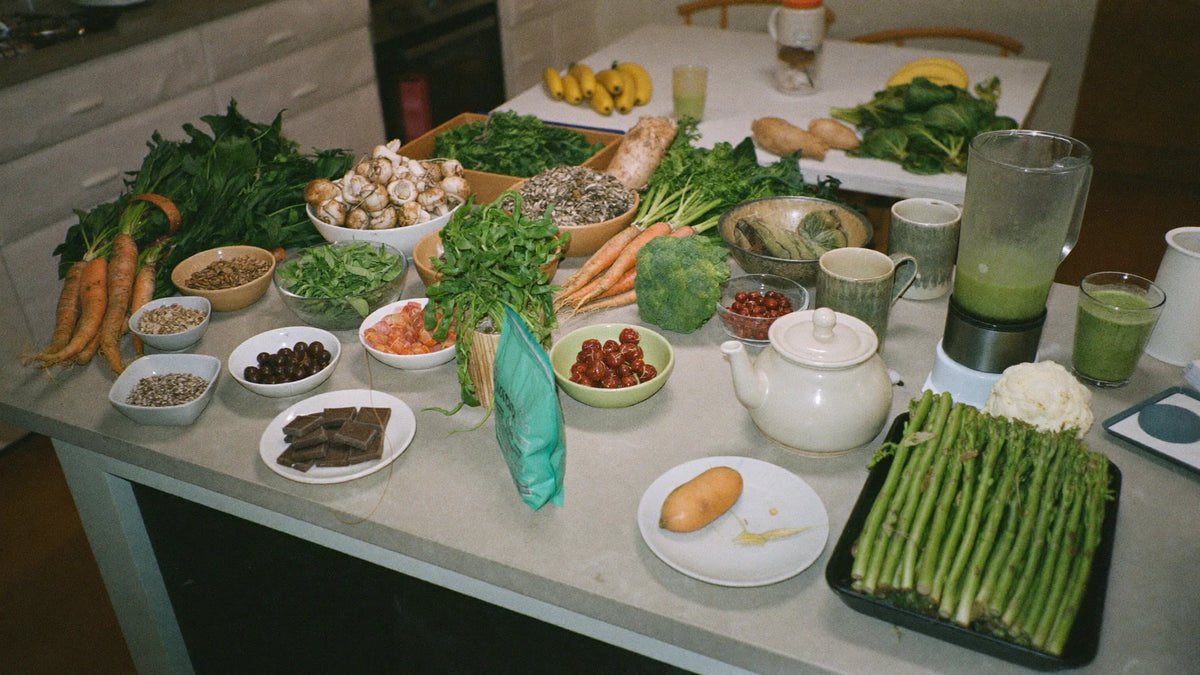
🛒 We planned one day of eating that covers every ingredient in a scoop of All-In-One Greens, as actual food, with July 2026 Canadian prices. The receipt: $644 to $862, roughly 25 kilograms of groceries, about 4,100 calories, and three ingredients no store in Canada will sell you.
A scoop of All-In-One Greens has 75 ingredients. People ask us, fairly, why not just eat them?
Great question. Here's the day. Be sure to stretch first.
6:15am. Wheatgrass.
You bought a juicer for this. Fresh wheatgrass needs juicing within minutes or it oxidizes into lawn-flavoured regret, and the tray of live wheatgrass was $12 at the farmers' market. One shot down.
One ingredient covered. 74 foods to go!
6:30am. The Seed Course.
Chia and flaxseed stirred into water, which becomes a texture we'd describe as "frog spawn, but wellness." A spoonful of apple cider vinegar on the side. Breathe through your mouth. Three more down.
7:00am. The Scramble.
Spinach, kale, and broccoli folded into eggs (the eggs are load-bearing: biotin, choline, and vitamin B12 live here too). Side of roasted beets and carrots. A slice of papaya, because papain is a digestive enzyme and today of all days you will need one.
Running total: 13 ingredients. It is 7am and you have eaten a produce drawer.
8:30am. The Alkaline Hour.
Barley grass and alfalfa. Here's the thing nobody tells you: these are not salad greens. Alfalfa you can sort of manage as sprouts on toast. Barley grass is a juicing grass, so it's back to the juicer, which you now co-own with this article. Two more down, plus a green tea (catechins, and mercifully, caffeine).
10:40am. Desk Snacks of Increasing Concern.
A single Brazil nut, which covers your selenium for about 15 cents and is genuinely the best deal of the entire day. A handful of goji berries. A handful of blueberries and raspberries. Pumpkin seeds. A square of the darkest chocolate in the building for the cocoa flavonoids.
A colleague asks if you're okay. You are 24 ingredients in. You are not okay.
12:30pm. The Mushroom Flight.
Lunch is six mushrooms. Shiitake sautéed, fine, normal, delicious. Then it gets weird:
Reishi is woody and bitter; nobody eats it, you simmer it into a tea that tastes like a humidified bookshelf. ($20 to $30 for dried slices at Canadian herbal shops.)
Chaga grows on birch trees and is sold in chunks. Also a tea.
Lion's mane is actually edible and lovely fried in butter, when your grocery store has it, which is a coin flip. ($8 to $12 when the coin lands right.)
Turkey tail is not sold as food anywhere. It grows on dead logs. You either forage it or buy capsules.
Cordyceps is the punchline of the whole day. Wild Cordyceps sinensis has traded between $20,000 and $110,000 per kilogram, which at one point out-priced gold. The 150mg in one scoop, bought wild, would cost $3.00 to $16.50. Per day. That is more than an entire scoop costs, for one ingredient out of 75.
(If mushrooms are your thing, our reishi deep-dive explains what the tea is actually doing.)
2:00pm. The Produce Montage.
Artichoke. Ginger. An apple, eaten mostly for its peel. Cranberries. Rosehips, which you are now steeping, because it turns out half this diet is teas. Acai, which in Canada exists only as frozen purée packs. Rosemary, pulled off the plant on your windowsill like a garnish of desperation.
By 3pm you have eaten or steeped 41 things and your kitchen looks like a farmers' market was evacuated in a hurry.
4:30pm. The Bananas Situation.
One scoop carries 15mg of vitamin B6. A banana has about 0.4mg. To match the dose from bananas alone you would need 38 bananas, so let's call the one banana you're eating right now "symbolic" and move on to the beef liver you're having for dinner, which single-handedly rescues the B-vitamin project (B12, folate, vitamin A, copper) and is the reason this schedule includes an ingredient your grandmother would recognize.
6:30pm. Dinner, and the Fine Print.
Liver and onions (the onions are morale). A sweet potato. A glass of soy milk for the lecithin, 1,600mg of which is in every scoop. Yogurt with live cultures for dessert, aiming at the probiotic strains, though matching Bacillus coagulans and Lactobacillus acidophilus UALa-01, the specific clinically studied strains in the scoop, requires reading yogurt tubs like a court document. (Probiotic strain-matching matters; our gut-health evidence review covers why.)
9:00pm. The Three Impossible Things.
You did well. But three label lines cannot be eaten in Canada at any price:
Policosanol is a wax alcohol extracted from sugar cane. Real Canadian Superstore will sell you an actual sugar cane stick for $4.00, and chewing it gets you sugar and zero policosanol. Supplement only ($29 to $46 a bottle).
Alpha lipoic acid exists in food at doses so small that matching 20mg means measuring organ meat in kilograms, not servings.
Ginkgo biloba is a leaf extract. The tree is decorative. Do not eat the tree.
And 14 more, from spirulina and chlorella to ashwagandha, rhodiola, milk thistle, and slippery elm, are supplement-aisle-only in Canada. Not exotic online. Just not food.
The Receipt.
| The day, measured | Total |
|---|---|
| Grocery + supplement cart (minimum purchasable units) | $644 to $862 CAD |
| Cart weight | ~25 kg |
| Calories if you eat one serving of each edible item | ~4,100 |
| Ingredients with no food form sold in Canada | 3 |
| Supplement-aisle-only ingredients | 14 |
| Teas you have personally steeped today | 5 |
| One scoop of All-In-One Greens | $2.97 (less on subscription) |
Prices checked July 2026 at Canadian retailers; produce at typical grocery prices. The cart buys you more than one day of most items, and that's the trap: spinach comes in 312-gram tubs when the scoop uses 300 milligrams, a thousand-to-one ratio, so you're rebuying the perishable half of this cart weekly while it composts itself in your crisper.
The Honest Part.
Now the caveat we owe you, because the label doses are the point. A scoop doesn't contain a bowl of spinach; it contains a concentrated 300mg of it, plus 74 other things in doses chosen to add up to something your day is probably missing. Nobody at Magic Scoop thinks you should skip vegetables, and a greens powder does not replace them. Whole food carries fibre, protein, and satiety no powder matches. Eat the salad.
The absurdity cuts the other way: assembling this specific breadth, the mushrooms, the adaptogens, the strains, the trace minerals, as food is a part-time job with a grocery bill to match. The scoop is the boring, efficient version of a day that would otherwise involve a juicer, five teas, a court-document yogurt tub, and a decorative tree you're not allowed to eat.
That's the whole pitch. One scoop, one glass, 75 ingredients, and your crisper keeps its dignity.
Frequently Asked Questions.
Can you get everything in a greens powder from real food?
Mostly, but not entirely. In Canada, 3 of the 75 ingredients have no edible food form at any price, and 14 more are only sold as supplements. The rest is achievable with roughly $644 to $862 of groceries and a very committed day.
Is it cheaper to eat whole foods than take a greens powder?
For core vegetables, yes, always. For the full breadth of a 75-ingredient formula, no. Matching it as food cost $644 to $862 in minimum purchases versus $2.97 per scoop, largely because exotic items sell in units far bigger than their doses.
Does a greens powder replace vegetables?
No. Whole vegetables deliver fibre, protein, and fullness that no powder replicates, and we'd tell you to eat them first. A greens powder covers breadth: the mushrooms, adaptogens, enzymes, and trace nutrients most days never include.
What's the hardest greens powder ingredient to get from food?
Wild Cordyceps sinensis. It has traded between $20,000 and $110,000 per kilogram, so one scoop's 150mg dose would cost $3.00 to $16.50 on its own, more than an entire scoop of All-In-One Greens.


